Portfolio

Shobhit Singh

Embedded systems that help humanity | dependable, culturally aware, built for everyone.

Senior Computer Engineering student at Iowa State. I build edge AI that works reliably for people who weren’t part of the design process; and I think hard about how technology should feel to the person using it, not just to the engineer who built it.

LinkedIn /in/shobhsk
GitHub @Shi6aSK
Location Ames, Iowa
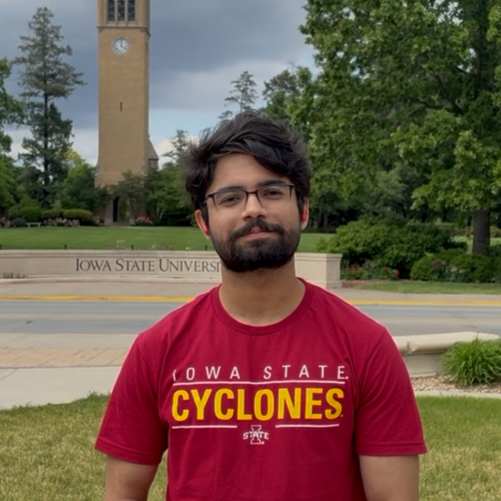
Shobhit Singh headshot

Career Objective

Technology is growing faster than people’s ability to live with it comfortably; especially for those who aren’t conventionally “tech people.” I want to close that gap.

My focus is edge AI and embedded systems that are dependable by design and culturally aware by intention: systems that adapt to the diversity of human context rather than demanding humans adapt to them. That means rethinking interaction paradigms, reliability standards, and what it actually means for a system to work for its user.

Long-term I want to work at the intersection of human-centered system design and edge computing | helping define how the next generation learns to live with technology as a tool that serves them, not one that overwhelms them.

Senior Design

Salt.E | Autonomous Salt Spreading Robot

CPRE 491–492 | Team of 6 | Complete

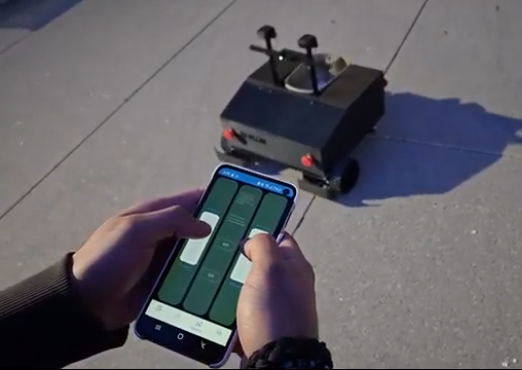
Autonomous rover patrolling campus sidewalks: detects ice, dispenses salt precisely, cutting waste and labor without a human spotter.

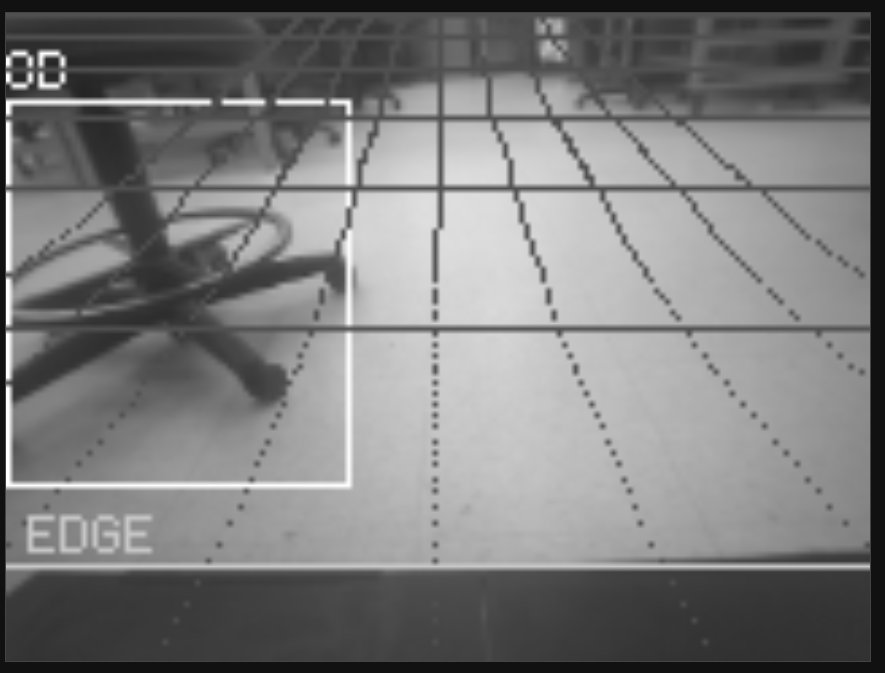
My Role: Leading the ESP32-S3 vision subsystem and Companion Android App development: camera interface, DMA capture, CV obstacle detection, and cross-controller sync.

Skills

  • ESP-IDF camera & DMA
  • CV heuristics / obstacle detection
  • Cross-controller messaging

Projects

MIRA 2.0: Fault-Tolerant Multimodal Presence Verification

CPRE 5450 | Spring 2026

Fault-tolerant activation layer for MIRA fuses a 24 GHz mmWave radar sentinel with camera verification using confidence score Ci = ws·S + wf·F + wt·T. Classifies sensor disagreements as transient vs. persistent and transitions a fail-safe FSM, so the system never activates on ambiguity.

Designed end-to-end FreeRTOS task model, TWDT watchdog, UART radar parser with CRC-8, frame quality monitor, and safe-state recovery policy.

Skills and Knowledge Gained

  • Fault-tolerant systems design following Avizienis et al. fault taxonomy
  • Health-aware sensor fusion with confidence scoring and temporal redundancy
  • UART packet parsing, CRC verification, and timing-fault detection
  • FreeRTOS watchdog integration and fail-safe state machine design

MIRA: Multimodal Assistive Robot

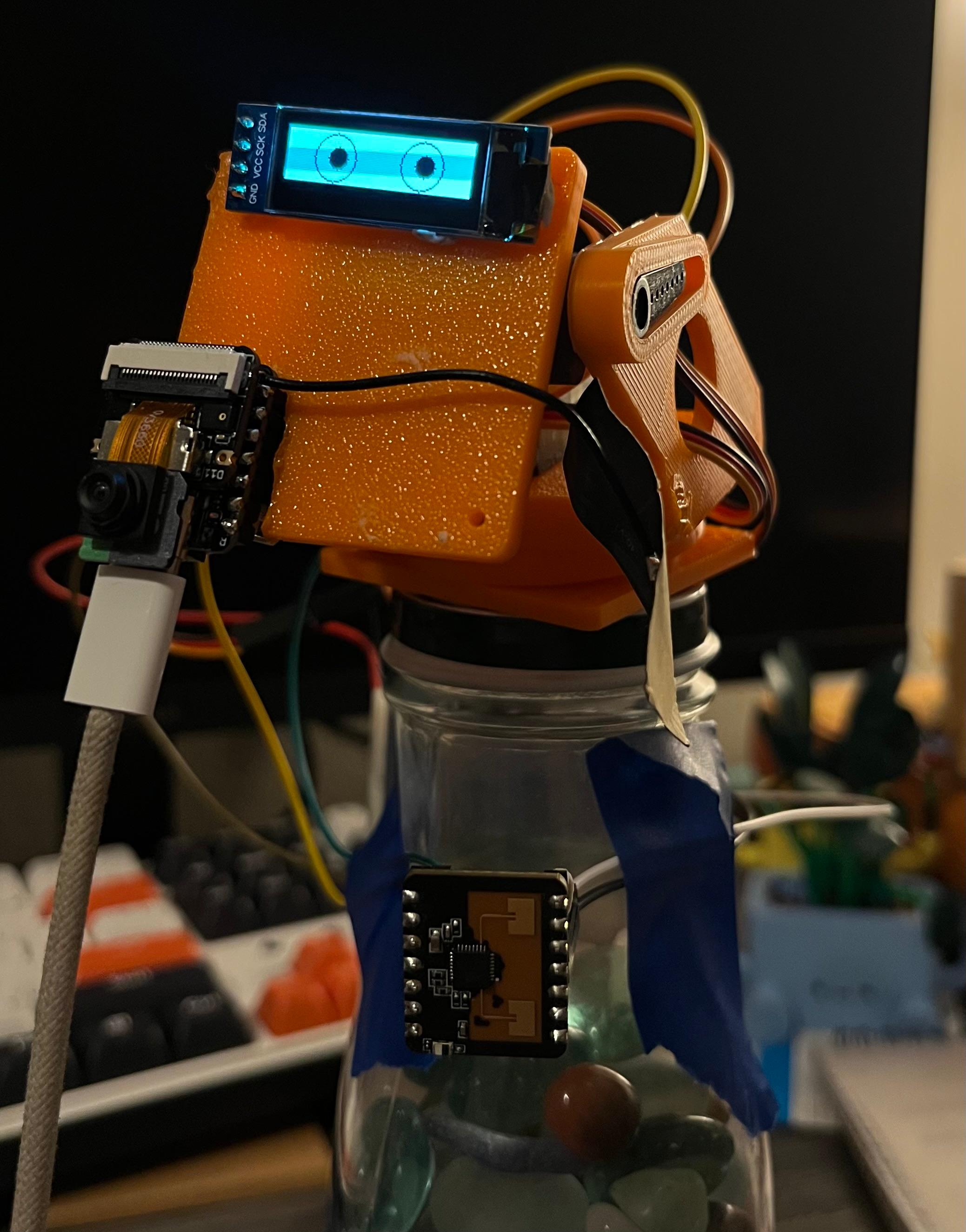
CPRE 5750 | Spring 2025 MIRA robot with OV2640 camera, OLED eyes display, and Seeed XIAO ESP32-S3 Sense

Privacy-first edge perception robot on the Seeed XIAO ESP32-S3 Sense. Face detection gates the mic, an open-palm gesture triggers voice capture, a point gesture fires a snapshot, both routed to a local Gemma 4 2B model for assistive responses. All perception stays on-device or on a local laptop companion.

Built the full stack: camera DMA pipeline, skin/face detector, block-grid gesture recognition, servo pan-tilt tracking, HTTP API, UART console, and Gemma desktop integration.

Skills and Knowledge Gained

  • Multimodal sensor fusion on memory-constrained embedded hardware
  • Edge-cloud split design (ESP32-S3 perception + laptop LLM inference)
  • FreeRTOS concurrency, DMA buffering, and PSRAM management
  • Privacy-preserving CV with gesture-gated recording

PerchGuard: Motion-Triggered Bird Feeder Monitor

Fall 2025

Seeed XIAO ESP32-S3 bird-feeder monitor: motion-triggered 10-second audio/video capture, encrypted and streamed to phone, running entirely off-grid.

Designed the Firmware, power budget, and ROI-masked motion pipeline, tuned for always-on responsiveness off a single battery.

Skills and Knowledge Gained

  • Low-power embedded design with deep sleep and wake-on-motion
  • ESP-IDF camera, audio, and secure messaging integrations
  • Edge ML heuristics for event detection

CANary: Automotive CAN-Bus Telemetry & Edge Alerts

Spring 2025

OBD-II/CAN probe that decodes live PIDs and streams health snapshots over BLE: with mic and camera context captured during fault events.

Built the CAN stack, BLE telemetry service, and multimodal anomaly flagging for drivers and technicians.

Skills and Knowledge Gained

  • Automotive CAN and OBD-II protocol parsing
  • Embedded concurrency with FreeRTOS tasks
  • Bluetooth Low Energy data streaming

Autonomous Wi-Fi Optimization & Router Placement Robot

CPRE 2880 | Fall 2024

Arduino Uno + Tiva C hybrid that maps Wi-Fi RSSI across a room, drives to optimal positions, and renders live heatmaps in a Python GUI — demo operator steered by the interface alone.

My Role: Built the real-time Python GUI and full subsystem integration: keeping robot telemetry and map display in sync with no line-of-sight.

Skills and Knowledge Gained

  • Multi-microcontroller coordination and serial protocols
  • Real-time visualization with Python and Matplotlib
  • Human-in-the-loop system design

Multifunctional Audio Tool using Streamlit

Spring 2024

Browser audio workstation: denoise clips, auto-transcribe speech, and synthesize audio in one Streamlit app.

My Role: Owned the data pipeline, optimized inference for lightweight deployment, and iterated on the UX with classroom feedback.

Skills and Knowledge Gained

  • Signal processing and spectrogram analysis
  • Rapid ML prototyping with Python
  • Web UI deployment using Streamlit

Research Projects

Quantum Networking Protocols

Fall 2025

Investigating link-layer and transport abstractions for near-term quantum networks at ISU. Focusing on reliable entanglement distribution over noisy channels.

Skills and Knowledge Gained

  • Quantum networking theory
  • Python-based simulation tooling
  • Collaborative academic writing

Chaos Theory for Image Encryption

Summer 2024

Novel chaos functions for pixel permutation, diffusion, and key generation in image encryption — with a roadmap toward quantum-era resilience. Presented at Qiskit Fall Fest '24.

My Role: Authored the chaos model, ran statistical randomness tests, and presented findings to a technical audience.

Skills and Knowledge Gained

  • Applied chaos theory in cryptography
  • Scientific computing with Python (NumPy, Matplotlib)
  • Research communication to technical audiences

Trusted Execution Environments for Hyperledger Fabric

Spring 2024

Surveyed TEE integrations for Hyperledger Fabric — mapped threat models and architectural trade-offs across emerging Web3 stacks.

My Role: Synthesized research papers, created comparison matrices, and presented recommendations to blockchain-focused cohorts.

Skills and Knowledge Gained

  • Security architecture analysis
  • Technical writing for distributed systems
  • Web3 ecosystem landscape mapping

Biomimetic Self-Healing Robots Article

Spring 2024

Synthesized cross-disciplinary literature on biological machines as blueprints for autonomous self-repairing robots — spanning materials science, robotics, and biology.

My Role: Coordinated peer reviews, performed comparative analysis, and communicated findings for both academic and public audiences.

Skills and Knowledge Gained

  • Interdisciplinary research synthesis
  • Technical writing and presentation
  • Scientific storytelling

Comparative Analysis of Pre- and Post-Quantum Encryption Algorithms

Fall 2023

Benchmarked classical cryptosystems against NIST PQC candidates — performance, implementation complexity, and migration strategy analysis.

My Role: Evaluated algorithmic trade-offs, built reproducible experiments, and documented guidance for developers planning quantum-safe upgrades.

Skills and Knowledge Gained

  • Cryptographic benchmarking workflows
  • Technical documentation and visualization
  • Research-driven decision frameworks

Experience

Horse's Mouth — Operations and Technical Content Intern

Operations & technical content intern at Horse’s Mouth (now part of Yocket), a startup building resources for registered investment advisors. Partnered directly with the CEO on mentor acquisition, content workflows, and analytics dashboards.

Duties

  • Coordinated directly with the CEO on mentor acquisition funnels
  • Shipped AI-assisted SEO content workflows and analytics dashboards
  • Redesigned onboarding documentation for distributed contributors

Skills

  • Content automation with Python and no-code tools
  • Stakeholder communication and expectation management
  • Leadership in ambiguous, fast-paced environments

Resume

Latest resume — research, awards, and leadership. Updated each recruiting cycle.

Download Resume (PDF)
  • Research & Publications: Quantum encryption, trusted execution, biomimetic robotics
  • Awards: Qiskit Fall Fest '24 Hackathon winner, ACM Chapter leadership honors
  • Activities: Quantum Computing Club chair (India), ISU Tranfer Honors Society and ACM Student Chapter.

General Education Reflection

How General Education Shaped My Engineering Mindset

Throughout my undergraduate journey, my general education courses played a much larger role in shaping my engineering mindset than I initially expected. While my technical courses taught me how systems function, the general education curriculum taught me how systems behave—socially, culturally, biologically, and environmentally. Together, these perspectives have helped me understand engineering not just as a technical discipline, but as a human-centered practice affected by global and societal contexts.

One of the most influential courses I took was ANTHR 3090: Introduction to Culture and Language, which opened my eyes to how deeply communication is tied to cultural norms and power structures. Studying linguistic patterns, cultural identity, and cross-cultural communication helped me recognize why engineering solutions often fail when designers assume a one-size-fits-all approach. For example, when building global technologies—whether AI systems, embedded devices, or social media platforms—the diversity of user language, values, and lived experiences must be considered to avoid exclusion, misuse, or unintended harm. This course strengthened my ability to collaborate in diverse teams and improved my awareness of the cultural assumptions I bring into engineering problem-solving.

In World Regions in Global Context, I learned how geography, politics, economics, and history intertwine to shape regional development. This course made contemporary global issues—such as resource scarcity, conflict, migration patterns, and economic inequality—feel less abstract and more structurally understandable. As an engineer interested in quantum computing and edge technologies, this perspective is essential. The course reminded me that technological progress cannot be separated from global realities: supply-chain fragility, the digital divide, and unequal access to computing infrastructure are real constraints that shape what engineering solutions are feasible or ethical. Understanding how different regions operate prepares me to design technology that respects global diversity rather than reinforcing existing inequalities.

Another impactful class was EBTY 183L: Biological Machines, where we studied cellular systems as if they were engineered machines—with feedback loops, communication channels, energy systems, and failure modes. This perspective helped me appreciate biological resilience and efficiency, which in turn informs how I think about engineering systems. Concepts like distributed processing, redundancy, and adaptive response mirror ideas in cyber-physical systems and embedded networks. Studying biological systems strengthened my intuition for designing robust engineering solutions that can withstand uncertainty, noise, and environmental variation—core challenges in fields like edge computing, autonomous devices, and hardware security.

Finally, CSET 108: Environment and Sustainability reinforced the environmental responsibilities that accompany any engineering decision. I learned how seemingly small design choices can cumulatively impact ecosystems, energy consumption, and global sustainability goals. Today’s major engineering problems—climate change, e-waste, resource depletion, and unsustainable manufacturing—require solutions grounded in environmental literacy, not just technical capability. This course made it clear that future engineers must consider carbon footprints, material sourcing, and long-term ecological consequences when designing new technologies or computational infrastructures.

Together, these courses have prepared me to approach engineering problems from a broader and more responsible perspective. Issues such as misinformation, global conflict amplified by technology, environmental degradation, and unequal access to digital infrastructure are all contemporary challenges that demand interdisciplinary thinking. The cultural awareness from ANTHR 3090, the geopolitical understanding from World Regions, the systems thinking from Biological Machines, and the environmental consciousness from Environment and Sustainability collectively shape how I approach future engineering challenges. Whether I am designing embedded systems, contributing to future quantum computing hardware, or working on secure networked technologies, these courses ensure that I consider not just how to build something, but whom it affects, how it will be used, and what long-term impact it may have on society and the planet.

In conclusion, my general education experiences were not separate from my engineering development—they were foundational to it. They expanded my worldview, strengthened my communication abilities, and taught me to integrate cultural, environmental, and global perspectives into my technical work. These lessons will continue to guide me as I pursue graduate study and future research, helping me become not just a better engineer, but a more thoughtful and responsible one.

Cumulative Reflection

My Engineering Journey So Far

At Bennett, I leaned into that curiosity through student organizations. As General Secretary of the ACM student chapter and Chairperson of the Quantum Computing Club, I ended up doing a lot more than just attending events. I helped organize talks, mentored peers, and ran nerdy deep-dive sessions on topics like post-quantum cryptography and trusted execution environments. That turned into actual research projects: a comparative analysis of pre- and post-quantum encryption algorithms and a review of advances in TEEs for blockchain security. Those experiences made me realize how much I enjoy both research and explaining technical ideas in a way that other people can actually use.

Transferring to Iowa State University for my junior year was a turning point. I was the first student to do that partnership program from Bennett, which meant stepping into a new continent, a different academic system, and a place where I suddenly had to choose my own courses instead of following a fixed curriculum. My first semester at ISU was rough, I was completely used to the Indian system, where expectations and paths are more rigid. Instead of treating that as a vague “culture shock,” I ended up approaching it the way an engineer approaches a problem: I met with advisors, watched how my classmates managed their workloads, and iterated on my study habits until I found a rhythm that worked. That experience pushed me to take responsibility for my own learning in a much more deliberate way.

One of the biggest shifts at ISU was my growing interest in embedded systems. I bought an ESP32-S3 mostly out of curiosity and started teaching myself how to actually make it do something meaningful. That self-learning spilled into projects like an automotive CAN-bus telemetry system (“CANary”) and a motion-triggered bird feeder monitor (“PerchGuard”), where I had to combine low-level communication protocols, edge processing, and practical constraints like power usage and responsiveness. None of that was “required” in class; I learned machine learning basics, embedded C, and networking details because I wanted my ideas to work in the real world, not just on paper. Similarly, my earlier work on encryption and security came from realizing that non-technical people are extremely vulnerable online simply because they don’t understand what’s happening behind the scenes, so I tried to fill that gap with projects and explanations aimed at everyday users.

One of my favorite examples of designing and integrating a system was our Wi-Fi optimization and router placement robot. I was responsible for the entire user interface and the overall integration of the subsystems. The GUI had to do more than just “look nice”, it needed to stay perfectly in sync with the robot’s movement, show its real-time location, and generate a heatmap of Wi-Fi signal strengths as it scanned. For the demo, the driver wasn’t allowed to look at the robot directly, so the GUI effectively was their eyes. That meant any mismatch between what the robot was doing and what my interface showed would immediately break the illusion and the usefulness. I spent nights tuning the data pipeline between the robot and the UI, dealing with limited location information, smoothing out timing issues, and making sure that the user could intuitively understand what was happening. That project taught me a lot about system-level thinking: it’s not enough for each individual component to work; the entire experience has to make sense to the person using it.

Alongside the technical work, communication has been a constant theme in how I operate in teams. Whether it was coordinating tasks, mediating small conflicts, or helping teammates articulate their ideas during presentations, I naturally drifted toward roles that involved organizing and translating. I’ve seen how a lack of clear communication can sink a project, so I put real effort into making expectations explicit and making sure everyone knew what they were doing and why. That made meeting deadlines much less chaotic. On the written side, I’ve always liked creating technical content for non-technical audiences, from my “Quantum Computing for Everyone” and “Personal Cybersecurity” web essays to documentation I wrote back in ACM and the quantum club. Even in my operations and technical content internship at Horse’s Mouth, a lot of my impact came from writing and structuring content that actually reached and engaged people, not just existing as jargon on a page.

My ethics course at ISU pushed me to zoom out and think about the larger consequences of my future work as an engineer. For my final case study, I wrote “Algorithmic Ethics and Human Rights: An Examination of Meta’s Role in Global Conflicts,” where I analyzed how Facebook/Meta’s algorithms influenced real-world harm in Myanmar, Ethiopia, and the Israel-Palestine conflict. I used frameworks like consequentialism, stakeholder ethics, and a human rights lens to examine how seemingly “neutral” algorithmic decisions led to amplified hate speech, misinformation, and, ultimately, violence and displacement. That project was personal in a way I didn’t expect; consuming constant negative news, especially about war and injustice, had already affected my own mental space. Writing the paper helped me understand that as engineers, we don’t get to hide behind “unintended consequences.” If we design systems that operate at global scale, we have a responsibility to monitor their impact and build guardrails to reduce harm. That assignment is one of the clearest examples where my coursework directly deepened my sense of ethical and professional responsibility, especially in a global and societal context.

Being an international student has also expanded my understanding of what “global context” actually means in day-to-day engineering. Back home, people were more relaxed about coursework, and the intensity level felt very different. At ISU, I’ve seen classmates pour huge amounts of time and energy into projects, research, and internships. That contrast forced me to raise my own standards and broaden my perspective. It’s made me more aware of how different educational cultures shape expectations, how teams with mixed backgrounds think about problems differently, and how engineering decisions can’t be separated from the environments and societies they emerge from.

Across both universities, a big part of my growth has come from stepping into leadership and community roles. As General Secretary of the ACM student chapter, Chairperson of the Quantum Computing Club, and later a student leader in other spaces, I discovered that I genuinely enjoy mentoring and teaching. It’s one thing to understand something yourself; it’s another to break it down so that someone younger or less experienced can build on it. That’s where I really saw the connection between communication (ABET 3) and lifelong learning (ABET 7): every time I teach something, I’m forced to refine my own understanding and stay up to date. These roles also made me more intentional about seeking out external resources, research papers, technical documentation, expert talks, and even human rights reports in the case of my Meta ethics work, rather than waiting for everything to be handed to me in a classroom.

If I had to summarize what I’ve learned about myself through this whole journey, I’d say my main strengths are coordination, creative problem-solving under constraints, and a stubborn curiosity. I like being the person who pulls the pieces together when a project seems stuck, especially when resources are limited or the problem looks unsolvable at first glance. I also know now that I’m happiest when I’m learning something new and then turning that knowledge into something concrete, whether that’s a case study on algorithmic ethics, an encrypted system, or a quirky embedded device that quietly does its job at the edge.

Looking forward, I plan to go to graduate school in computer engineering, likely focusing on edge computing in the near term and eventually moving toward quantum computing hardware. The big, maybe slightly dramatic, goal is to work on something that outlives me, whether that’s a new algorithm, a hardware design, or an application of quantum computing that genuinely benefits humanity. The more I’ve learned, the more obvious it’s become that engineering is not static. Technologies, threats, and societal needs are constantly evolving, and if I want to contribute meaningfully, I’ll have to keep evolving too. My undergraduate journey, from quantum clubs in India to embedded systems and ethics case studies in the U.S. has convinced me that I’m ready to take on that responsibility: to communicate clearly, to think ethically about the systems I build, and to keep learning long after the degree itself is over.
Ethics Paper (CPRE/EE 394)

Algorithmic Ethics and Human Rights: An Examination of Meta's Role in Global Conflicts

This paper analyzes how Meta's content moderation algorithms influence real-world safety in conflict zones. It discusses the tension between amplification, censorship, and human oversight through ethical lenses such as utilitarianism, rights-based frameworks, and professional responsibility.

I explore how engineers can design accountable systems, propose audit mechanisms, and outline policy collaborations that reduce harm without silencing vulnerable communities.

Download Ethics Paper (PDF)